What Shreya Shankar learned from a year of putting ML into production
Every ML guest so far has said that they primarily use Twitter for keeping up with new research, tools, and people in the field.
Because of that, I’ve now started a Twitter account! I’ll be tweeting video clips of podcast highlights and what I’ve learned from interviewing these awesome people.
You can follow me here: @CharlieYouAI
New episode with Shreya Shankar!
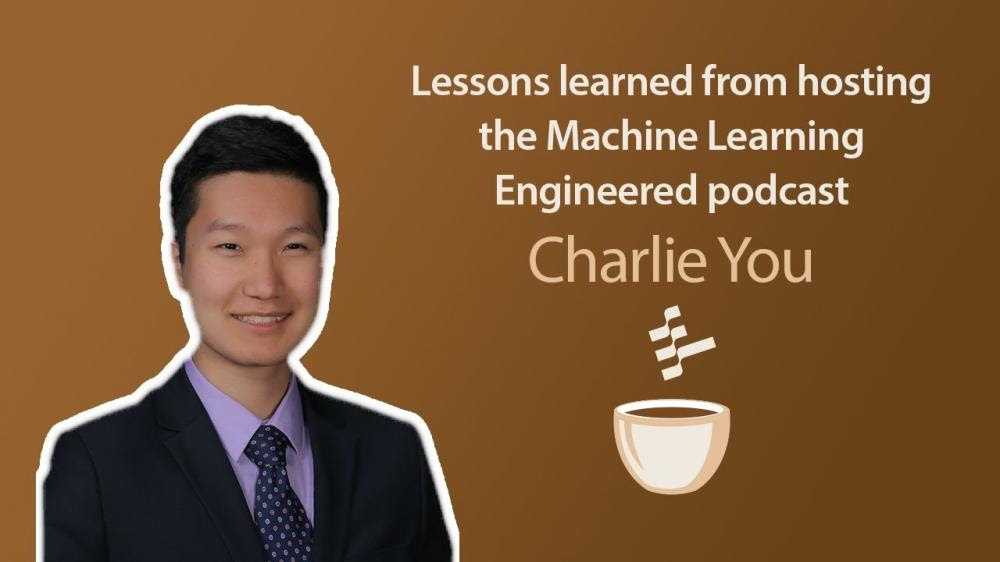
Shreya is a Machine Learning Engineer at Viaduct AI, master's student at Stanford, and has previously worked at Facebook and Google Brain. She writes some excellent articles about machine learning on her personal blog.
Shreya discusses what she's learned in the past year about making ML useful by putting into production. She touches on strategies for ensuring reproducibility, feature engineering best practices, and her checklist for building AI-driven systems.
I wrote out the best quotes and takeaways from the episode in this Twitter thread. Check it out and like/re-tweet if you found it helpful!
Click here to listen to the episode, or find it in your podcast player of choice: https://www.mlengineered.com/listen
| Listen to the Episode |
Best of the web
- PyTorch Lightning v1.0 has been released!
Notable features include hardware abstractions, training loop automation and elimination of significant boilerplate, and other really neat things like:
I'll definitely be using this for the next research project I do (mostly have been focused on engineering the past few months).
- Awesome ML Ops is an exceptional list of references for everything ML Ops curated by Larysa Visenger. Highly recommended! I'll be (slowly) working my way through these.
- Software is eating the world, machine learning is eating software, and transformers are eating machine learning. A new paper submitted to ICLR 2021 achieves state of the art performance on computer vision tasks while requiring substantially less resources to train.
To dive in more, see this Towards Data Science article and this video from Yannic Kilcher that break down the paper further.
If this continues, "Attention Is All You Need" may end up being one of the most predictive paper titles ever created.
What I'm thinking about
The more experience I get building machine learning systems, the more conviction I have that:
- ML engineering is now or will become the highest leverage skill available in tech.
- ML research isn't slowing down anytime soon. When one subfield slows down, another starts to make break-through progress.
- Understanding how to work with ML systems will become a foundational skill in the future, even for lay-people, similar to how working with a computer is necessary for nearly every valuable job today.
Machine Learning Engineered
I mentioned last week that I had to skip an episode release because of guest reschedulings. Since then, I’ve recorded five episodes, which was fun but extremely tiring. Rest assured, I won’t be missing another release! Also, in case you missed it, I wrote up a study guide for aspiring ML engineers that lays out a clear starting path and contains a list of resources that I and my friends have learned from. Read the Study Guide In this week's edition: My Interview on the MLOps Community podcast...
There’s no podcast episode this week due to an unfortunate coincidence of multiple guests needing to reschedule. My apologies, I’ll be doing my best in the future to not let this happen again. That doesn’t mean I don’t have any new content for this week, though! Today I’m releasing an article that answers one of the most common questions I get: “I want to learn machine learning, where do I start / what do I do?” When I was first getting started in ML, it was pretty straightforward: there was...
After a month off from releasing original interviews on the podcast feed, I’m so excited to be sharing this episode with all of you! Aether Biomachines is one of the most interesting machine learning startups I’ve ever come across and I was thrilled to interview the founder, Pavle Jeremic. Building a Post-Scarcity Future using Machine Learning “How can we make sure that the economy is so productive that the desperation that leads people to commit atrocities never happens?” In this episode,...